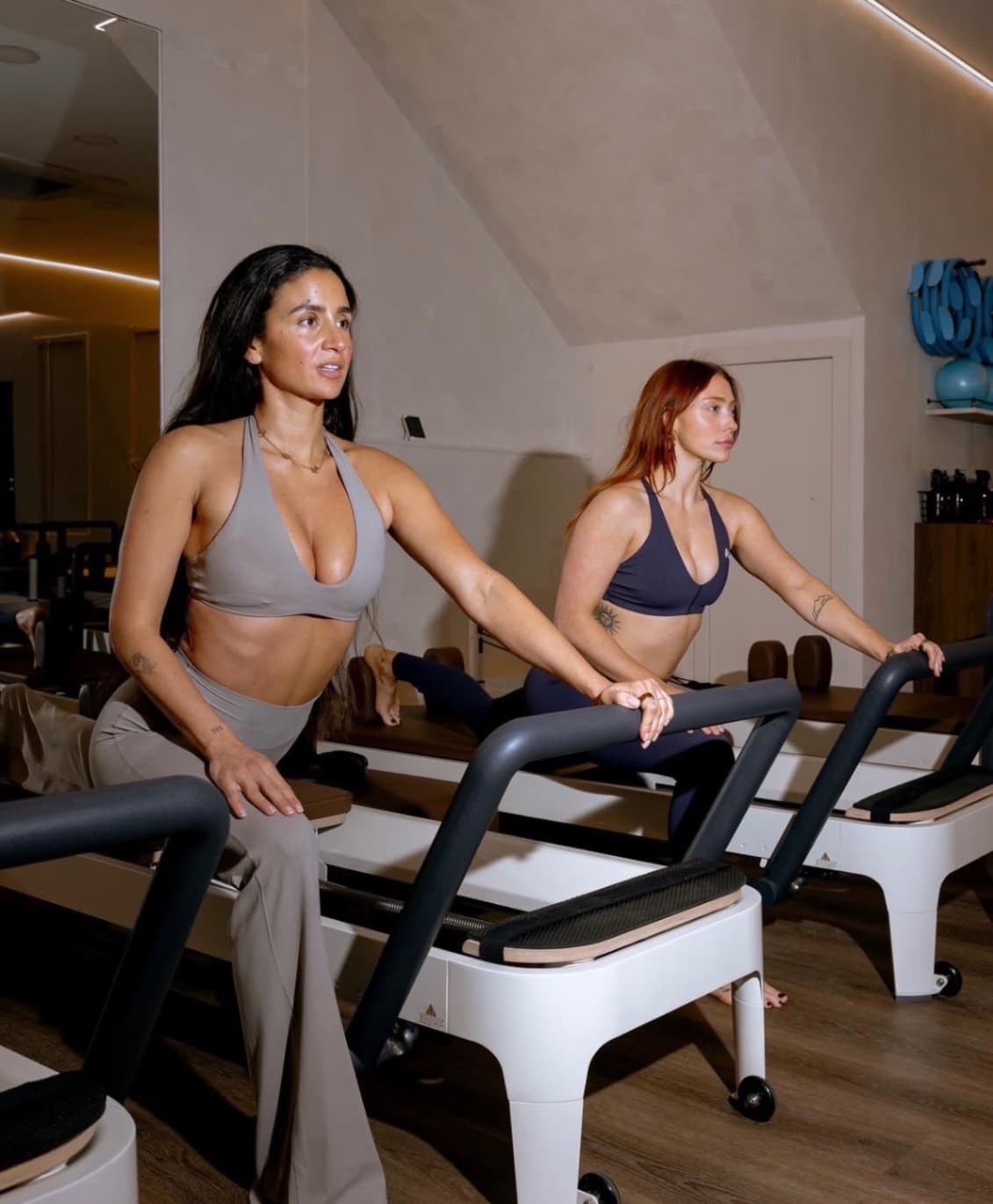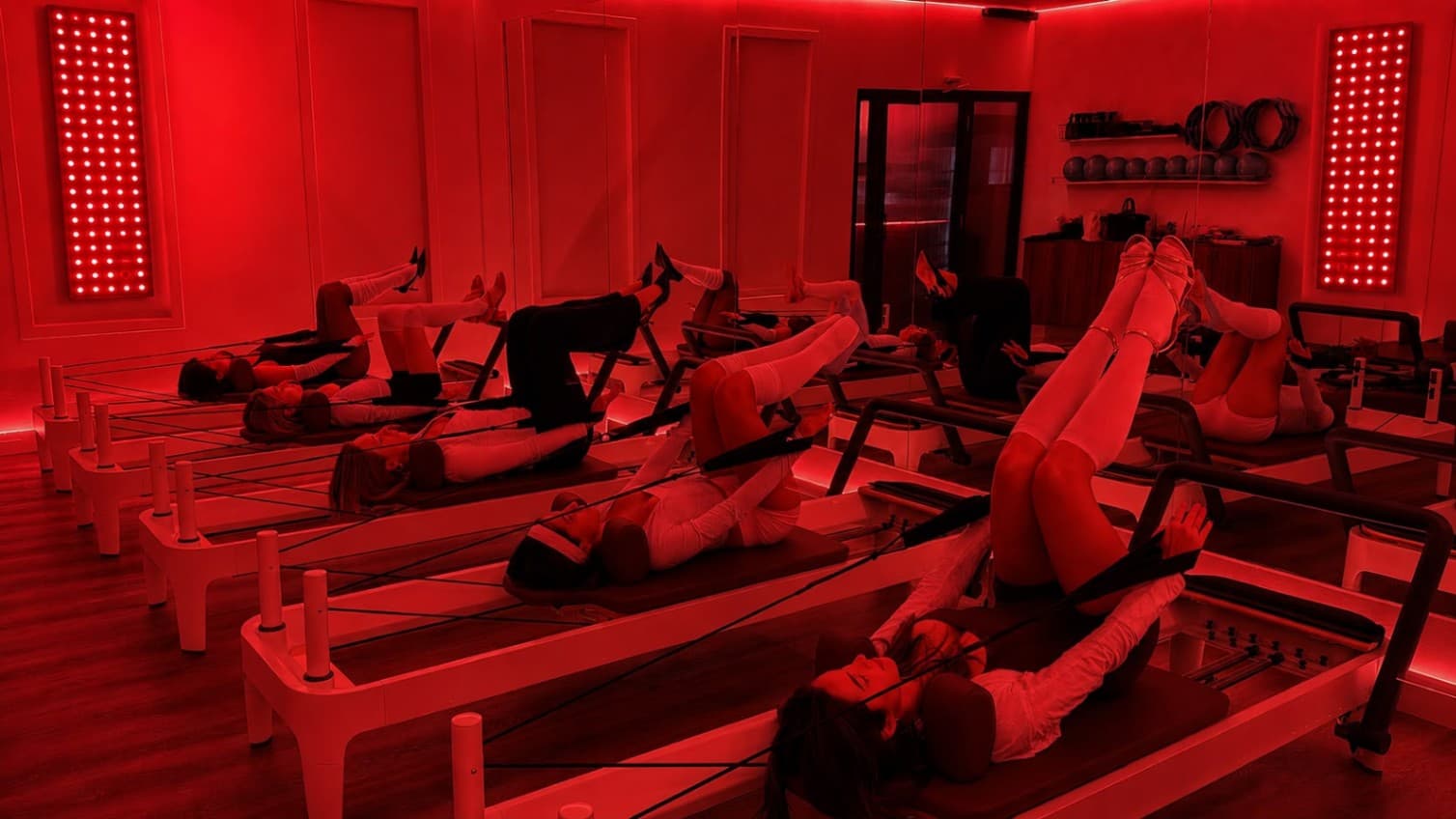
Lower back pain – especially the dull, low-grade kind that comes from long hours at a desk rather than a specific injury – is one of the most common reasons people first ask about Reformer Pilates at KY Pilates. It's worth being clear about what it can genuinely help with, and where its limits are.
An important note first
This is general information, not medical advice, and it's not a substitute for seeing a doctor or physiotherapist – particularly for sudden, severe, or worsening back pain, or pain following an injury. Any existing injury or medical condition needs to be disclosed to your instructor before class, every time, so they can adjust what you're doing accordingly.
Why desk-related back pain responds well to Reformer work
A lot of everyday lower back tension comes from a fairly predictable pattern: hip flexors that shorten from sitting, glutes that switch off, and a core that isn't doing its share of stabilising the spine. Reformer Pilates directly targets that pattern – footwork and bridging work reactivate the glutes, hip stretches on the Reformer counter tight hip flexors, and the core engagement built into almost every exercise gives the lower back more support than it's getting from a chair all day.
Why the Reformer specifically, rather than other training
The spring-based resistance means you're building strength and control without the compressive load of heavy free weights or the impact of running – both of which can aggravate an already sensitive lower back. Because resistance is adjustable and instructors set it before every exercise, it's realistic to work at a level that's genuinely appropriate for where your back is that day, not a fixed program that doesn't account for it.
What it can't do
Reformer Pilates isn't a treatment for a specific diagnosed condition – a disc issue, sciatica, or a structural problem – and it's not a substitute for physiotherapy if that's what's been recommended to you. For general, non-specific tension and the kind of stiffness that builds up from sitting or inactivity, it's a genuinely useful, low-impact option. For anything sharper, persistent, or diagnosed, see a doctor or physio first and bring their guidance to your instructor before you book.
Getting started
If you're cleared to train and dealing with general desk-related back tension, our instructors will build modifications into your first few classes while you build strength around it – you don't need to arrive already strong or flexible. See our schedule or book a class at KY Pilates in Shoreditch.